
The Role of Calcium Carbonate in Soap and Detergent Manufacturing
Uses of Calcium Carbonate in the Detergent Industry
Calcium Carbonate in Detergents is widely used as a versatile additive that enhances the physical and economic properties of soap and cleaning products. While it is not a cleaning agent itself, it plays a crucial role in improving detergent formulations, especially in industrial applications.
How Calcium Carbonate is Used in Soap and Detergents
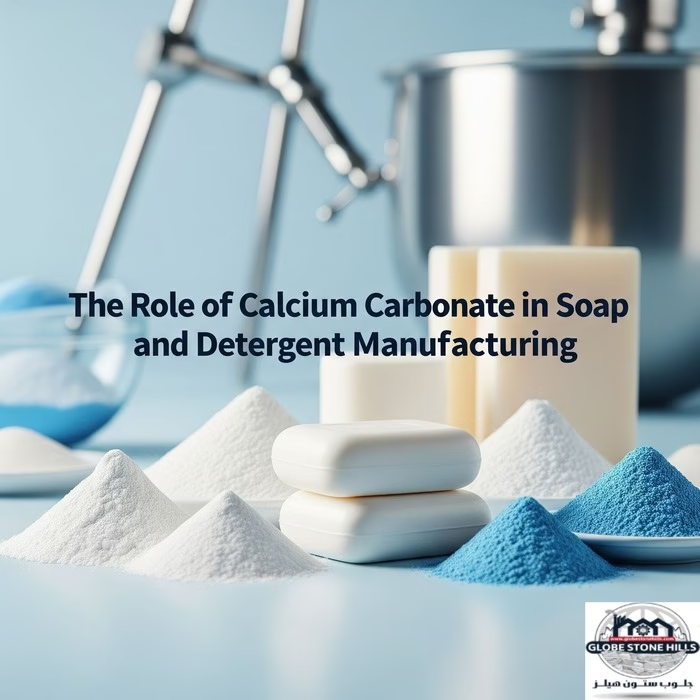
One of the most common applications of Calcium Carbonate in soap production is as a filler. It is added during the mixing stage to improve texture, hardness, and consistency of solid soaps. In detergent powders, it enhances flowability, prevents clumping, and contributes to better storage performance.
Key Roles of Calcium Carbonate in Cleaning Products
1. Filler and Volume Enhancer
Calcium Carbonate is a cost-effective filler that helps reduce production costs in detergent manufacturing without compromising the performance of the final product. Its inert nature makes it suitable for replacing expensive active ingredients such as surfactants and phosphates.
2. Cost Reduction
One of the main benefits of Calcium Carbonate in detergents is its affordability. Manufacturers can maintain product quality while reducing formulation costs, especially in bulk production of soaps and powdered cleaning agents.
3. Texture Improvement
In cleaning products, Calcium Carbonate improves the texture and flow of powdered detergents. It prevents clumping, ensuring easy handling, packaging, and dispensing.
4. Whitening Agent
In laundry detergents, Calcium Carbonate enhances visual brightness and boosts the appearance of fabric whitening products. It adds opacity and gives a premium look to soap bars.
5. Hardness Enhancer for Soaps
When used in solid soap, Calcium Carbonate for soap hardness improves the bar’s strength and durability, preventing it from dissolving quickly in water.
6. Acid Stabilizer
In some industrial detergent additives, Calcium Carbonate serves as an acid neutralizer, protecting both the product formulation and the user’s hands from harsh reactions.
7. Mild Cleaning Action
Though not a primary cleaning agent, Calcium Carbonate offers mild abrasiveness, especially in surface cleaners and floor detergents. It helps remove stains through mechanical action, making it ideal for abrasive cleaning products.
To learn more about calcium carbonate, click here.
Benefits of Calcium Carbonate in Detergent and Soap Formulations
Binder & Stabilizer: It helps bind ingredients, maintaining formulation consistency and extending shelf life.
Improved Appearance: Enhances brightness and opacity of soaps and detergents.
Water Softener: Softens hard water, improving cleaning efficiency.
Multifunctional: Works as a filler, abrasive, whitening agent, and stabilizer in one formulation.
Affordable Raw Material: Ideal for cost-effective detergent manufacturing.
Calcium Carbonate in cleaning products continues to play a vital role in the formulation of modern soaps and detergents. From increasing volume and reducing costs to enhancing texture and brightness, it is a reliable and widely used component in the industry. Whether it's in powdered laundry detergent, solid soap, or floor cleaner, its multifunctionality makes it indispensable in industrial detergent production.
About the largest company in grinding and producing calcium carbonate Globe Stone Hills
- Globe Stone Hills: Your Comprehensive Guide to High-Quality Calcium Carbonate Solutions
- The Role of Calcium Carbonate in Soap and Detergent Manufacturing
- Precipitated vs Ground Calcium Carbonate: Key Differences, Uses & Benefits
- Calcium Carbonate Quarries in Egypt | High-Purity White Mineral for Industries
- Difference Between Coated and Uncoated Calcium Carbonate